1. To kick things off: Tell our audience a bit about the origin story of your Band.
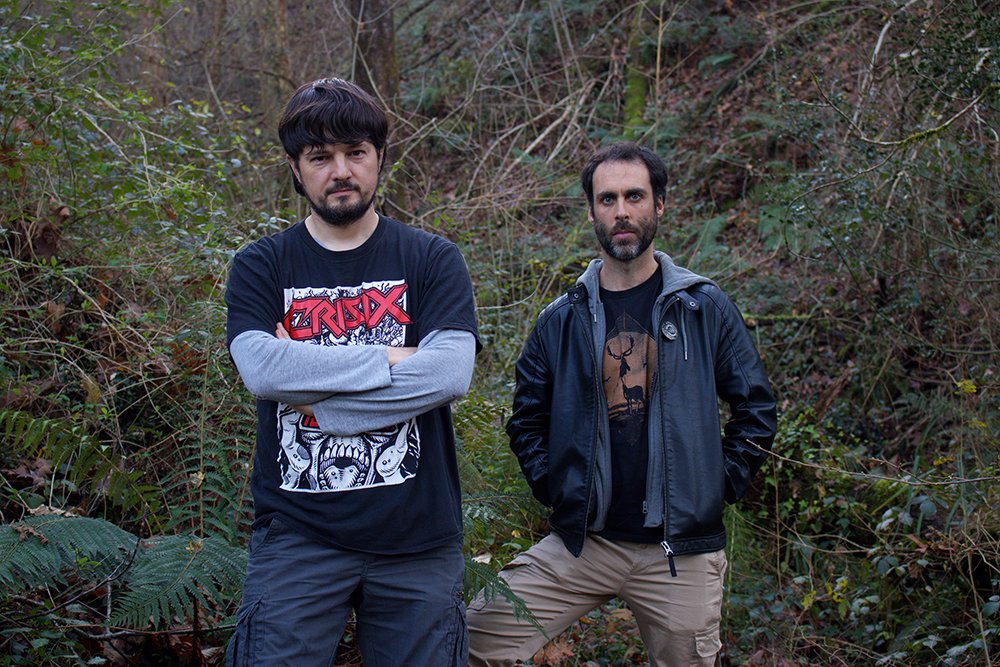
Aschen started around 2022 as a personal project. At the time, I was just starting to play guitar, and once I realized I had a number of fairly solid compositions, I started looking for musicians to help me with the vocals and bass. This led to a collaboration with Igor Valle, a musician I had known for many years. Through him, we also had a drummer for about a month or so, but unfortunately, we eventually ended up programming the drums. Together, we recorded the 2023 demo, but shortly afterwards Igor left the project and I started working with Atauzz, whom I knew from the local music scene. He took care of the bass on our debut album.
2. Tell us about your new project?
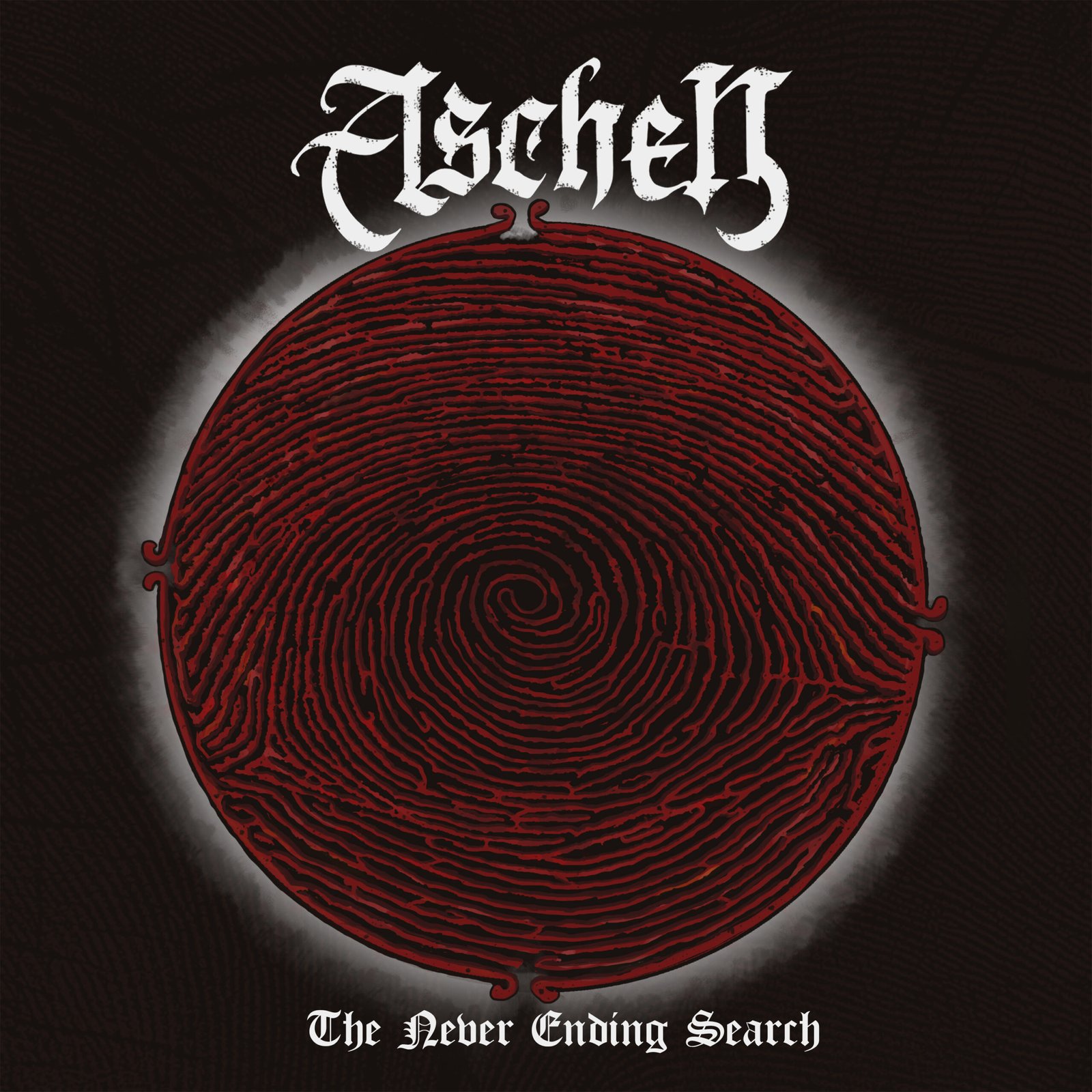
Our latest release is our debut album, “The Never Ending Search”, out now via the Italian label Wormholedeath. We recorded it at Atala Studios in Bera—my hometown—with engineer and good friend Iñigo Irazoki. Mastering was done by Toni Lindgren at Sweden’s renowned Fascination Street Studios, whose credits include Dimmu Borgir, Kreator, and many more. As a visual artist, I see Aschen as a holistic artistic project, so I also handled part of the album’s artwork—front and back covers included—along with the music videos for “Azken Arbolak” and “The Forsaken Redeemer”.
3. If you had to describe the sound of your Band to someone who hasn’t heard you yet: What would you say?
I’d say it’s a fairly melodic take on black metal, with touches of other extreme metal styles. What really sets it apart is the dynamism of the songs and the wide range of emotions they evoke. Both in my view and according to the specialized press, it’s an album that grows on you with every listen—it never gets monotonous, offering new layers and nuances in each track while remaining cohesive as a whole. When it comes to influences, I find it difficult to name them directly, since it’s more of an unconscious process. That said, reviews have mentioned bands like Satyricon, Shining, and Khold. Still, there’s a very personal touch that gives the music its own distinctive character.
4. How has the songwriting evolved with the band over the years? What does that process look like for you lately?
The writing process has evolved a lot, and technology has had a huge influence on it. In the early days, I wrote everything just on guitar—I’d finish the whole song and then record it roughly with my phone. Once I got an audio interface and started using Cubase, I began adding drums and vocals, and that forced me to rethink the arrangements: extending certain sections, trimming others, repeating riffs with or without vocals, trying different drum patterns, and so on. These days I approach things differently. I usually start from a riff or melody I’ve jotted down on my phone, bring it into Cubase, and slowly build the track from there, focusing primarily on how I want the drum parts to develop and then fitting new guitar riffs around that. I used to leave vocals until the very end, but now I incorporate them earlier—even if they’re just placeholder melodies—to give the song a clearer structure from the start. I’m already composing songs for the next album, and so far they have more streamlined structures—fewer riffs per track—compared to some of the songs on “The Never Ending Search”, which tended to stack one riff or melody after another.
5. Outside of metal, what books, Video Games, movies, or life events leave a mark on your music?
Beyond music, what inspires me most is humanity itself—specifically, the inability of human beings to confront their own inner conflicts, and how that leads to injustice, war, exploitation, the destruction of nature, and so on. I think these are themes that resonate strongly with metal as a whole, and particularly with the rage and darkness inherent to black metal. I also draw inspiration from visual arts. There are works and artists from different eras and styles that evoke emotions very similar to what I feel when listening to black metal. Among my favorites, I’d mention Goya—especially his engravings and the Black Paintings—along with Otto Dix, Alfred Kubin, Munch, and Lynch, among others.
6. What are some of the recurring themes or messages you find yourself exploring in your lyrics?
Once all the lyrics were written, I realized that, in general, they all allude in one way or another to a kind of personal search to abandon suffering or to find a solution to a decaying world and society. To give some examples, the title track, “The Never Ending Search,” delves into the feeling of doubt and uncertainty when trying to find meaning, truth, or fulfillment in life. “Sasi Santuaren Amiltzea” and “The Last Glow” touch upon the spiritual path as a way to escape suffering. “Black Hounds of Justice” deals with bad karma and the nightmares of a person consumed by selfish evil. Inspired by the Passion of Christ, “The Forsaken Redeemer” uses this story as a metaphor for a society in which truth has been deprived of any lasting meaning, where narratives can be questioned, distorted, or erased whenever they conflict with personal interests and established structures of power. Finally, on a different note, “Azken Arbolak” serves as a direct environmentalist plea about the survival of the last trees.
7. What is one song you’ve written that you feel captures the absolute core identity of the band?
Probably “The Never Ending Search” and “The Forsaken Redeemer.” Both are quite elaborate in terms of composition, with a wide variety of resources and different atmospheres within the song: mid-tempo parts, hypnotic melodies, blast beats, etc., that evoke emotions ranging from melancholy to unleashed fury. Still, I believe the full picture only emerges when you listen to the entire album—there are tracks like “Amal,” “Buried Name,” and “The Last Glow” that bring sounds and textures you won’t find anywhere else on the record.
8. Do you find your energy translates better in an intimate club style venue or a massive festival setting?
For now, Aschen is a studio project—not so much by choice, but due to our personal circumstances, which make it practically impossible to first find a stable lineup to play live, and then dedicate enough time to rehearsals. As a fan, I definitely prefer clubs over festivals. Everything feels closer and more intimate, and you don’t get the kind of crowd that’s just there out of curiosity or to avoid going back to the tent, which often happens at festivals. Finally, if we ever played live, I’d feel much more comfortable in a small club.
9. Which Artists or Band inspired you to be in a Band?
I wouldn’t say there’s been any specific band. I come from a town, Bera, which—despite having fewer than 4,000 inhabitants—has a great musical tradition and a huge number of bands and people dedicated to music. It’s a truly unique case, and in fact, nowadays many people in the Basque Country know it thanks to its music scene. So, I’d say the environment itself encouraged me to take up this hobby a little more seriously.
10. If you could sit down and collaborate with any Artist or Band right now, who would be at the top of your list and Why?
In a fantasy scenario, I would call Frost or Hellhammer to collaborate as drummers, because I’ve admired them since I was a kid—they’re absolute machines. I’d also love to have some top-tier guitarist lay down some solos. Even though he’s not a black metal musician, I’m a huge fan of Andy LaRocque’s solos. His solo on Melechesh’s “Purifier of the Stars” is simply mind-blowing.
11. What’s the current Pulse of the Metal Scene from your perspective?
Wow, that’s probably the toughest question of the whole interview… At least in the Basque Country—and I imagine in the rest of Spain too—metal has pretty much vanished from popular culture. Years ago, during town festivals, you’d almost always find a bar or a venue that would play metal songs from time to time, because they were genuinely popular. That’s gone now. Nowadays, there are only a handful of metal bars left in the cities, and in most other places metal is practically forbidden. The same applies to mainstream radio, cultural programs, and so on—when they announce the weekly concert schedule, they NEVER mention metal gigs, while they do cover almost any other genre. Yet, paradoxically, I think more and more tours are coming through here in recent years, and attendance is pretty solid—not to mention festivals, which keep multiplying. That said, at least around here, you barely see anyone under 40 at these shows. And then there’s the sheer volume of releases. Hundreds of albums drop every day, and even though the overall quality is good, the saturation makes it hard to discover new bands that really grab your attention. I’m constantly checking out new music, but I’d say only about one in every thirty albums actually clicks with me.
12. Are there any endorsements or gear brands you’re currently working with that you’d like to shout out?
I usually use a Gibson SG which my brother lent me because I only own a cheap Ibanez that I sometimes use just to compose. I plug it into my computer with a Steinberg UR12 interface, and into headphones or Focal speakers. Sometimes I also play with small guitar amps, since I mostly play at home. When we recorded the album, we used combinations of different amps that Iñigo had at the studio, but honestly I have no idea which ones they were. As you can see, I’m not really into gear… my focus is mainly on composition.
13. What does your tour calendar look like? Any big shows or festivals we should be made aware of?
As I mentioned earlier, we don’t play live, so right now we’re focused on wrapping up the promotional phase for the album. I’m hoping to have this record completely put to rest in about a month or so, and then I’ll pick up the guitar again and start working on some new material. I’m not in any hurry, but I’d like to have the basic groundwork for the next album laid down by next summer. That said, we’ll see how things go—there are always unexpected twists along the way.
14. What is your very first Metal album you ever bought ?
The first metal CD I ever bought was Arise by Sepultura. I think I was around 13 or 14. What a great album.
15. What was the very first metal concert you ever went to?
I believe my first metal concert was Sociedad Alkoholika in Lesaka, but I think I had never heard them before—I went more for the party than for the show. The first one I truly enjoyed as a fan was Iron Maiden in Donostia-San Sebastián, together with Entombed and Spiritual Beggars, back in 2000.
16. What is your LinkTree or Online Link ?