1. To kick things off: Tell our audience a bit about the origin story of your Band.
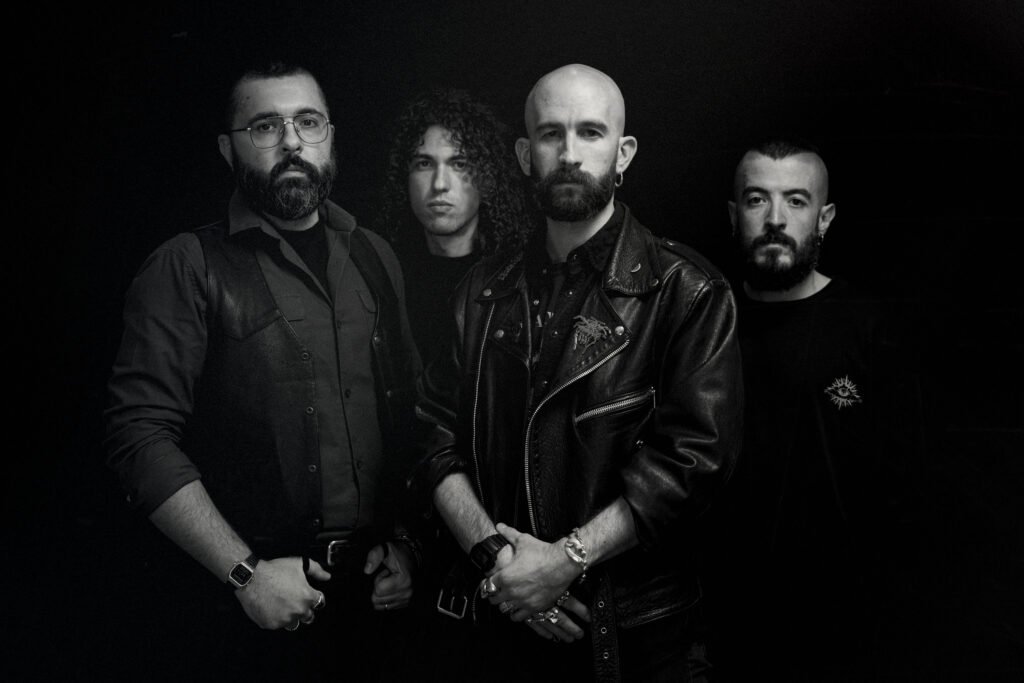
Emerging from the shadows in 2020 with a sound more firmly rooted in raw stoner doom, Orbita have undergone a profound evolution. Following the line-up changes that eventually led to the band’s current and definitive formation, they naturally began to embrace more introspective themes, shaped both by the members’ personal experiences and by their individual stylistic and musical influences.
2. Tell us about your new project?
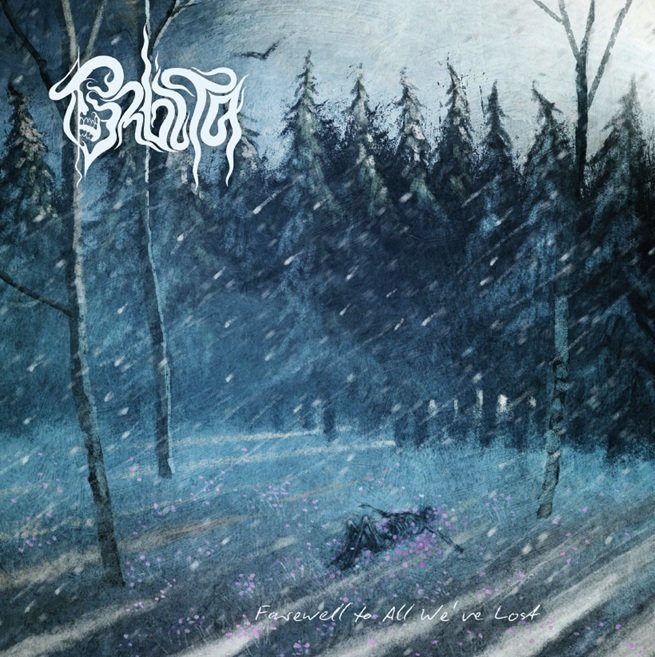
At the heart of their new album, Farewell to All We’ve Lost, lies abandonment—understood as a fragmentation of the self and as loss, but ultimately also as a slow process of reconstruction. The record moves through the seasons of an annus horribilis, eventually arriving at the acceptance of a stripped-down reassembling of the self: the only one capable of making some form of rebirth possible. The work unfolds as an unintentional concept album, born not from a deliberate decision made in advance, but from surrendering to an inner flow that emerged once the line-up had stabilized. As already mentioned, the intensity of each member’s personal experiences had a profound impact on both the writing and the performance: the gut dictated the ideas, while the mind gave them order, reshaping them into music.
3. If you had to describe the sound of your Band to someone who hasn’t heard you yet: What would you say?
It’s not easy to define our sound, and we’re very happy about that, but we’ll give it a try anyway. We could say that our sound lies somewhere between doom and post-metal, but we much prefer the idea of leaving it to the listener to find a more precise definition.
4. How has the songwriting evolved with the band over the years? What does that process look like for you lately?
Generally, in the earlier stages of the band, everything would emerge in the rehearsal room and would mostly be developed there. This time, we felt the need to share ideas and feelings not only during rehearsals but also “privately”, meeting at each other’s homes and talking, sometimes almost without playing at all. That was how the emotion was identified and shared. Then, in the rehearsal room, it was expressed and “interpreted”. This was a substantial diƯerence compared to our past experiences, and it helped us a lot.
5. Outside of metal, what books, Video Games, movies, or life events leave a mark on your music?
As for a “film,” definitely Twin Peaks and Badalamenti’s music. When it comes to the atmosphere of a video game, Silent Hill immediately comes to mind: wandering through the fog in a desolate city full of dangers, roads that lead nowhere, monsters attacking you—it feels like the perfect image of an intense introspective journey. As for a “book,” we would mention Guy de Maupassant’s short story The Horla, a journey into the ambiguities of the mind and perception.
6. What are some of the recurring themes or messages you find yourself exploring in your lyrics?
The album is about having internalised and come to terms with everything we have felt, but also having said goodbye to it, in the faint light of a rebirth that is still uncertain.
7. What is one song you’ve written that you feel captures the absolute core identity of the band?
Certainly Rotten Flowers, this is the core of the record, and represents what we have lived through both individually and as a group during the composition
8. Do you find your energy translates better in an intimate club style venue or a massive festival setting?
Playing in a club definitely allows for a more intimate connection with the audience. That said, we certainly wouldn’t turn down the chance to play at a big festival.
9. Which Artists or Band inspired you to be in a Band?
In the darkest atmospheres, the heaviness and pain of Bell Witch, Amenra, and the more traditional Warning resurface, while during the writing process, seemingly distant influences also found their way in, from Angelo Badalamenti’s cinematic textures to Matt Elliott’s dark songwriting.
10. If you could sit down and collaborate with any Artist or Band right now, who would be at the top of your list and Why?
From the past: Angelo Badalamenti. His compositions for David Lynch’s films delve deep into the human psyche and bring to the surface feelings and emotions that are often difficult to express in any other way. His music is also a fundamental part of the imagery and atmosphere of Lynch’s work. Today: Mat “Kvohst” McNerney (Beastmilk, Grave Pleasures, Hexvessel). I love all of his recent projects, especially those with a strong post-punk influence. I think he is a true musical genius, and he has an incredible voice. I also had the chance to see him live with his new project, Scorpion Milk, and I was impressed by what a great frontman he is, with a killer stage presence and attitude. [Matt] From the past: I have a very deep connection with Fabrizio De André. The human abysses explored in his songs have accompanied me throughout much of my life, and I still find comfort in them today. Perhaps, rather than collaborating with him, I would simply have liked to meet him in person. From the present: Colin H. van Eeckhout/Amenra. I feel the emotional impact of their performances—whether at their most violent or most melancholic—on my skin and deep in my gut. I would be honoured to expose and express that visceral emotional core alongside them. Obviously, we are dreaming very big here. [Nunzio] Definitely Amenra – a band I feel is emotionally closer to my own understanding of catharsis through music. Another artist who is just as essential is Matt Elliott; the suffering and pessimism that shine through in his lyrics, combined with the melody of his compositions, leave me speechless every time. [Gionni] A list of heroes would be too long to be interesting. What I want from a collaboration is to finish something and come out of it a bit more grown up — not just a good time in a room. From the past: Frank Zappa, even if this would have meant a massacre audition. Hard work, and I’d have learned more in a month than in years on my own. And Celso Valli for what concerns prodction and studio, one hystorical Vasco Rossi producer and a close friend of my guitar teacher who held him in enormous regard. Present: working with Tool or even only Maynard must be an incredible creative experience. [Vir]
11. What’s the current Pulse of the Metal Scene from your perspective?
Well, this is by no means an easy question to answer. Generally speaking, however, we can say that metal is—and has always been—in excellent health throughout every stage of its history. We cannot help but think, with a smile, of Tenacious D’s “The Metal.” The metal community is a deeply authentic one and, perhaps more than other scenes, it seems to have resisted the upheavals brought about by the digital age over the past few years, although it has inevitably been affected by them. Despite everything, the live dimension and the development of genuine relationships between bands, audiences, venues and small independent organisations remain essential. We believe that, within the metal scene, it is still possible to experience and appreciate the authenticity of music—and the sense of connection that grows around it—in a particularly meaningful way. At the same time, however, the opposite is also true: having access to an almost endless catalogue through digital platforms tends to discourage the kind of attentive and immersive listening that we generally gravitate towards, instead favouring a faster and more fragmented form of consumption. No one is entirely immune to these mechanisms, but it is undeniable that the metal world still has a remarkably strong immune system.
12. Are there any endorsements or gear brands you’re currently working with that you’d like to shout out?
At the moment we are not collaborating with any brands, but you never know.
13. What does your tour calendar look like? Any big shows or festivals we should be made aware of?
We’re currently working on our live schedule. Some dates have already been confirmed and are just waiting to be announced.
14. What is your very first Metal album you ever bought ?
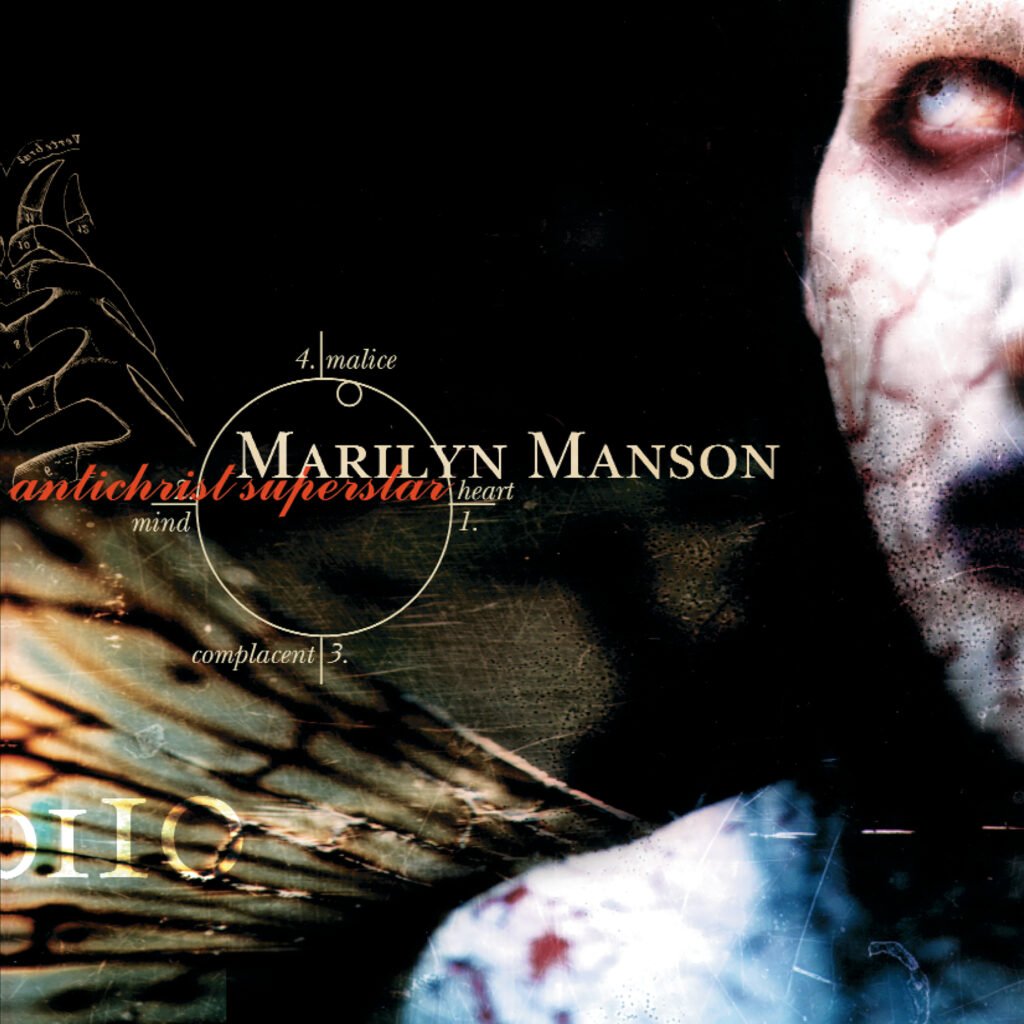
Like many people, i started with the pillars of Metal: Maiden, Helloween, Priest, Manowar and Sabbath. The first Metal album i ever listened to was Better Than Raw by Helloween, shortly after it was released. A schoolmate lent it to me, and it introduced me to the genre, its attitude and its imagery. But the album that made me think, “This is going to be my life forever”, was Iron Maiden’s Live After Death, which i bought at my favourite record shop when i was twelve. [Matt] The real revelation came when I was eight years old and secretly listened to Marilyn Manson’s Antichrist Superstar in my sister’s bedroom, after she had decided not to give me permission. One of her high-school classmates had lent her the CD, and she had only accepted it out of sheer curiosity, since she has always listened exclusively to pop music. Not long afterwards, some of my first purchases were the compilation CDs included with the Italian edition of Rock Sound. They completely shattered me with tracks such as Madball’s “Hold It Down,” Otep’s “Filthee,” Machine Head’s “Bulldozer,” and many others. However, the first two “proper” LPs I bought were Nirvana’s In Utero and Black Sabbath’s self-titled debut. Both were seminal records for me. [Nunzio] The band that changed my life was Nirvana. When I was about 11, I listened to their entire discography and from there I set out to explore many other bands of that era. But things got really serious when I bought Iron Maiden’s The Number of the Beast, my very first metal album, and still one of my favourites. [Gionni] My first steps came especially my older brother. Punk and grunge, Nirvana above all. Then at thirteen he showed me a live video of Metallica’s Master of Puppets from the And Justice for All tour. The riffs and the crazy guitars — those angular shapes, nothing like the one I had at home really got me. My first metal album was Kill ‘Em All, a present always from my brother. The first ones I bought myself were the deluxe editions of Black Sabbath’s debut and Dio’s Holy Diver, plus some prog stuff at the Fnac in Paris. [Vir]
15. What was the very first metal concert you ever went to?
Iron Maiden, of course, in June 2003. To this day it remains one of the best, if not the best, concerts i’ve ever seen. [Matt] Although it was not technically a metal concert, the very first live show I absolutely have to mention was Verdena, in the far south of Italy where I grew up. I believe it was in 2001. They are one of the most important bands in the Italian rock and alternative scene, and they remain among my favourite artists to this day. Speaking of the best concerts I have attended, however, I cannot limit myself to just one. Black Sabbath at the Arena di Verona was unforgettable: although Ozzy had not been in peak form for quite some time, he still managed to set the entire place on fire. Then there were Tool at Firenze Rocks, who need no introduction; more recently, Nine Inch Nails, who were absolute perfection; and, of course, Amenra. I must admit that their show had an atmosphere unlike anything I had ever experienced anywhere else. As of today, they are probably among my absolute must-see live bands. [Nunzio] My first proper concert was the 2003 Heineken Jammin’ Festival, with Iron Maiden as the headliners. I can still smell that rather unpleasant odour on the train the following morning. [Gionni] When I was sixteen, at Blogos in Casalecchio, near Bologna in aun underground context. My brother’s friends from a band named Bicoloured Men were playing along with Horror Vacui, all much older than me. The biggest was Tool at Firenze Rocks in 2019. Still my favourite band. More than a concert — for the visuals, the sound, the pacing, it was a proper trip. [Vir]
16. What is your LinkTree or Online Link ?