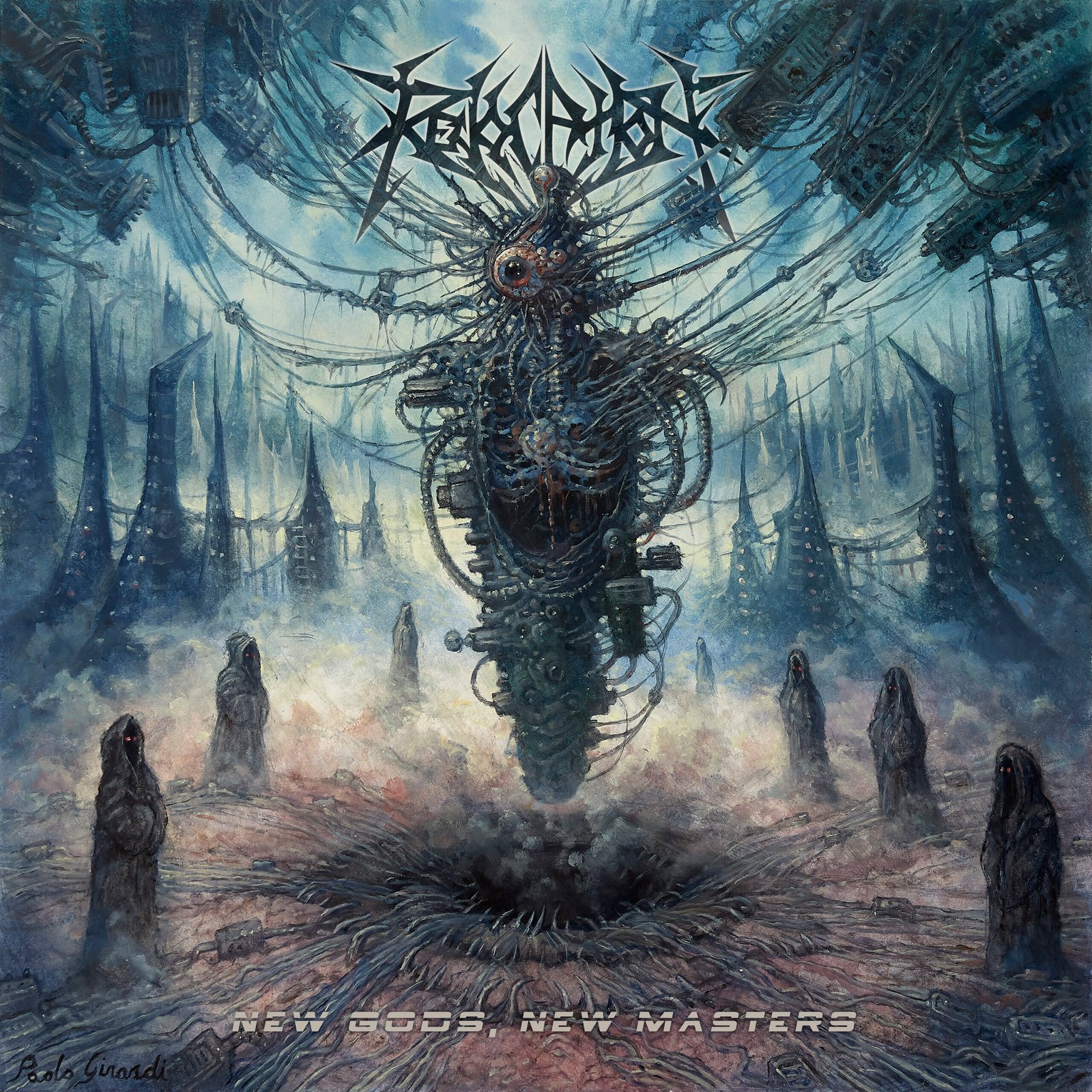
There is something deeply unsettling about Revocation at this point in their evolution. Not because they’ve become reckless or chaotic; but because they sound too aware. New Gods, New Masters doesn’t rage blindly at the future. It stares at it, unblinking, fascinated and disgusted in equal measure.
This is an album that breathes with intention. Every riff feels measured, predatory, and patient: like it already knows how the story ends. Where many extreme records overwhelm through excess, Revocation instead weaponize control. Precision becomes menace. Restraint becomes seduction.
At the center of the record is Dave Davidson, whose songwriting has never sounded sharper or more assured. His guitar work moves fluidly between surgical brutality and moments of almost obscene clarity, while his vocals feel less like a narrator and more like an oracle; detached, damning, inevitable. The band doesn’t lecture; it invites you closer, then quietly explains why you shouldn’t have come.
Sonically, the album is immaculate without feeling sterile. The production: handled by Davidson and elevated by Jens Bogren, is crystalline, but never polite. Each instrument occupies its own space, allowing the tension to coil instead of collapse. When the band surges, it feels earned. When they pull back, it’s intimate in a way that borders on erotic.
Thematically, New Gods, New Masters swims in dread rather than drowning in it. These songs circle ideas of creation, worship, and technological obsession, but they refuse easy metaphors. Instead, the album suggests that humanity hasn’t abandoned belief; we’ve simply upgraded it. Flesh gives way to circuitry. Faith gives way to function. And the result is something both miraculous and grotesque.
Guest appearances are woven seamlessly into the fabric of the record, never feeling ornamental. Each adds a different texture of madness, like voices echoing through different chambers of the same machine. Jazz-inflected guitar passages appear briefly, shimmering like forbidden knowledge, then vanish before you can fully grasp them. It’s provocative, not indulgent.
What truly elevates New Gods, New Masters is its confidence in silence and space. Revocation allow riffs to linger. They let discomfort breathe. They trust the listener to feel the implications rather than spelling them out. This is music that understands that fear is sexier when it whispers.
Twenty years into their existence, Revocation sound less like a band trying to prove dominance and more like architects documenting collapse. There is no triumph here, only clarity. No apocalypse fantasy, only the slow realization that we volunteered for what comes next.
New Gods, New Masters isn’t just one of Revocation’s most refined releases: it’s one of their most dangerous. Not because it’s heavier, faster, or louder: but because it feels true.