1.) To kick things off, tell our audience a bit about the origin story of Wailin Storms.
Justin: Wailin Storms originally started off as a minimal solo project in Corpus Christi, Texas.
After a show back in the day, a friend said: “you really wailed tonight” and a light went off in my
head and led me to call the solo project Wailin Storms, originally it was just my name. People
also began referring to the sounds of my early work as “Texas doom blues” which felt
appropriate at the time. After moving around to places like Baltimore, Berlin, and Zurich for
school and artist residencies I began collaborating with a full band when I moved back to the
states and settled in Brooklyn, NY. Our sound quickly evolved into something heavier and had a
doom punk feel to it but mixed with a southern gothic twang. We recorded the first two EPs:
“Bone Colored Moon” and “Shiver” within the 3 years of living and working in Brooklyn. In early
2013 I relocated to Durham, NC where I began working with most of the current lineup to create
several full length albums: “One Foot In The Flesh Grave,” “Sick City,” “Rattle,” “The Silver
Snake Unfolds,” and “The Arsonist.”
2.) Who took the lead on the lyrics for the song “The Arsonist” and what was the spark
that brought that track to life?
Justin: I came up with lyrics/melody for The Arsonist one day when playing guitar in the living
room and began humming the melody like a mournful chant. This song at its core is a love song
but also speaks to the sadness and anxiety that occurs in relationships, death, and the fear of
losing each other. The imagery used in the song was also inspired by the film “Wild at Heart” by
David Lynch.
The Arsonist is one of the most stripped down songs Wailin Storms has created to date and
shows a more raw approach to how we write music. It was nice to be able to let the song
breathe while still incorporating unique/new elements such as slide guitar, psychedelic bass
effects, and driving/tribal drum beats using mallets.
3.) If you had to describe the “Wailin Storms” sound to someone who hasn’t heard you
yet, what would you say?
Steve: It always depends on who’s asking and what references they might have. I usually
describe it as Heavy, Southern Gothic Doom Rock. A friend said: it’s what you’d get if Samhain
walked into a bar and had a drink with Nick Cave and Sixteen Horsepower
4.) Do you find your energy translates better in an intimate club venue or a massive
festival setting? Also, which show stands out as your all-time favorite?
Steve: Our energy feeds off the crowd regardless of size. People aren’t going to get into it if you
as a performer aren’t getting into it. As long as there’s genuine engagement, the setting doesn’t
really matter to me.
My favorite show has to be Acid Bath/Eyehategod. Honorable mention goes to The Spacebar in
Columbus, OH: the opening act was a super group of local musicians who came loaded with
props: silly string, beer bongs, squirt guns, the works. Crazy costumes, cover song mashups
that had no business working together but somehow did. It was genuinely hilarious. Word was
they got banned from the club afterward over the mess but honestly it was worth it.
Ben: As much as I love and ultimately prefer nice rooms with professional equipment and a
dedicated staff, it’s hard to beat the vibe of a small, shitty DIY spot that only needs 15 people to
feel packed. You may not be able to hear what you’re playing very well, but the energy in the
room is palpable.
Mark: Like Steve said, the size of the club doesn’t really matter. As long as people are engaged
and into it, the energy will be there. But there is something to be said about playing in a small
Steve: Adding a new musician, especially one as talented as Ben, organically creates a new
dynamic which after 10+ years together was a welcome change. The writing process felt more
energized, nuanced, and positive. Ben’s ability to craft complex vocal harmonies opened new
doors for more vocally driven parts and we found ourselves blending delicate moments with
heavy, driving elements in ways we hadn’t before.
Ben: Most of the songs typically begin with a rough sketch that Justin brings in, maybe just a
verse and a chorus to get us started, and then we all start jamming on it. This gives us a chance
to hear how the song breathes, what parts need to be longer/shorter, how many times do we
repeat a section, etc. I remember there being a lot of bridge sections in particular on this record
that were total spur of the moment accidents where one person would say “woah, what was that
you just did? Let’s mess with that!” Those moments of spontaneous creative expression are the
most energizing for me.
Mark: I feel it has gotten easier over time. I was a little worried at first when we added Ben, but
the transition has been seamless. Bringing someone new in can be a challenge. He brings a lot
to the table, such as great vocal harmonies. We took a lot of time crafting vocal harmonies on
this record. That is something we’ve never done before.
Justin: As the saying goes: we’re cooking with gas now. Ben brings a lot of constructive
feedback, innovative thinking to our songs, back up vocals galore, and uncanny musicianship
that has reshaped our sound in all the right ways. Our writing process is much more
experimental now and collaborative. The writing process is exciting and new. Excited for the
future.
5.) What are some of the recurring themes or messages you find yourself exploring in your
lyrics?
Justin: Dreams, insomnia, sickness, love, death, art, film, music, and every day
anxiety/depression that comes from living in a dystopian capitalist hellscape.
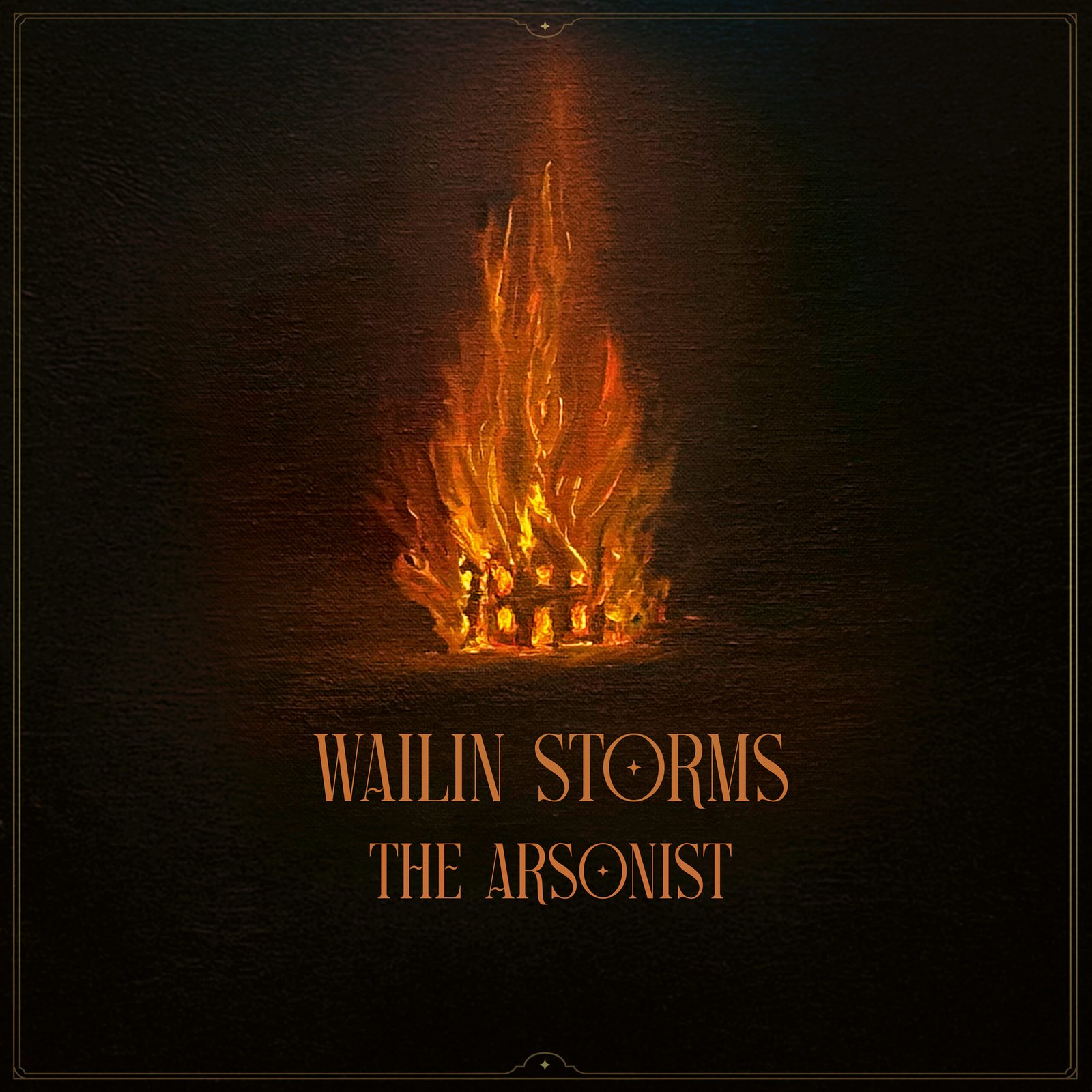
6.) The cover art for “The Arsonist” is striking, who was the creative mind behind that
vision?
Justin: I had an idea to call the record the Arsonist after seeing a painting by Rene Magritte.
Being a visual artist and musician I get inspired by many things but this painting really spoke to
me.
For the cover art I thought it would be interesting to attempt to paint some sketches I had done.
It’s been several years since I painted (I mostly draw these days) but it was nice to dust off my
old brushes and oils and work in this medium again. That said, the painting and album title were
directly influenced by Rene Magritte’s “Gaspard de la Nuit” and David Lynch’s “Wild at Heart.”
7.) Do you find your energy translates better in an intimate club venue or a massive
festival setting? Also, which show stands out as your all-time favorite?
Steve: Our energy feeds off the crowd regardless of size. People aren’t going to get into it if you
as a performer aren’t getting into it. As long as there’s genuine engagement, the setting doesn’t
really matter to me.
My favorite show has to be Acid Bath/Eyehategod. Honorable mention goes to The Spacebar in
Columbus, OH: the opening act was a super group of local musicians who came loaded with
props: silly string, beer bongs, squirt guns, the works. Crazy costumes, cover song mashups
that had no business working together but somehow did. It was genuinely hilarious. Word was
they got banned from the club afterward over the mess but honestly it was worth it.
Ben: As much as I love and ultimately prefer nice rooms with professional equipment and a
dedicated staff, it’s hard to beat the vibe of a small, shitty DIY spot that only needs 15 people to
feel packed. You may not be able to hear what you’re playing very well, but the energy in the
room is palpable.
Mark: Like Steve said, the size of the club doesn’t really matter. As long as people are engaged
and into it, the energy will be there. But there is something to be said about playing in a small
club that is packed! My favorite show has to be the Acid Bath show. They were incredible and
Brooklyn Paramount is such a beautiful venue.
Justins: I prefer small packed shows in small clubs, punk venues, and/or basement shows over
larger spaces with big gaps between us and the crowd. I thrive on that raw energy of a good
crowd. That said, our recent Acid Bath/Eyehategod show was one for the books.
8.) Who are the “inspirational” artists that actually made you want to pick up an instrument
and play?
Steve: FACS, Shipping News, Isis
Mark: The Ventures comes to mind. My dad introduced me to them when I was a kid, and he
taught me how to play guitar. As far as playing drums, I’d have to say bands like, Haymarket
Riot, Engine Down, Sleepytime Trio, and Sweep the Leg Johnny.
Justin: Nina Simone, The Sisters of Mercy, Bohren & der Club of Gore, The Wipers, Sun Ra,
Alice Coltrane, Birthday Party, Fugazi, Howlin’ Wolf, Clockcleaner
9.) If you could sit down and collaborate with any artist or band right now, who would be
at the top of your list?
Steve: Chelsea Wolfe would be incredible. Such a serene, haunting voice. That combination
would be surreal.
Justin: David Lynch, in heaven or whereever people go these days. But living artists I suppose
Cindy Lee, Les Rallizes Denude, or Bohren & der Club of Gore
10.) What’s the current pulse of the metal scene from your perspective?
Justin: The metal scene feels more vast now. Similar to punk in the late 90’s, Metal now feels
intertwined with pop culture more than ever but there’s still a lot of good bands doing their thing.
There are too many to name but a few that are out there grinding it out there on the road and
making unique sounds: Oranssi Pazuzu, Blood Incantation, Slowhole, Midnight, Goatwhore,
Castle Rat, Yob, Thou, Portrayal of Guilt, and Wayfarer come to mind.
Ben: It’s hard to gauge exactly what’s “in” right now and keep up with what’s trending. It does
seem like stoner metal and the “progressive sludge,” scene from the 2010 era seems to have
lost its spotlight a little bit, and things have gotten a little messier and more dirty sounding. I was
a big fan of Gel before they broke up, for example.
11.) Are there any endorsements or gear brands you’re currently working with that you’d
like to shout out?
Mark: I currently play Jenkins-Martin drums. They are made of fiberglass, and sound incredible.
Scott Jenkins deserves a shout out here, for sure. Every show I play with that kit, sound
engineers always have nothing but nice things to say about them.
12.) What does the tour calendar look like? Any big shows or festivals we should be
marking down?
We have some additional touring in the works but currently here’s the confirmed tour dates
Wailin Storms 2026 The Arsonist U.S. Tour
July 17 – Durham, NC @ Stanczyk’s [Album Release Show]
July 29 – Johnson City, TN @ The Hideaway
July 30 – Atlanta, GA @ Star Bar
July 31 – Knoxville, TN @ The Pilot Light
August 1 – Cincinnati, OH @ Motr
August 2 – Youngstown, OH @ Westside Bowl
August 3 – Columbus, OH @ Dirty Dungarees
August 4 – Pittsburgh, PA @ The Government Center
August 5 – Baltimore, MD @ Metro Gallery
August 6 – Brooklyn, NY @ The Gutter
August 7 – New Hope, PA @ John and Peter’s
August 8 – Richmond, VA @ Cobra Cabana
More dates to be announced
13.) Where’s the best place for fans to keep up with you and dive into your community
online?
Steve: Instagram, Bandcamp, our website is kept up to date as well.
http://www.wailinstorms.com/
https://www.instagram.com/wailinstorms/
https://wailinstorms.bandcamp.com/
Record Label Season of Mist